How Much Water Is Really Flowing Into Your Charleston Crawl Space?
Crawl Logic Lowcountry
The Question Every Contractor Claims to Answer (But Can't)
WHY "HUNDREDS OF GALLONS" IS JUST A GUESS
I got a call recently from a potential customer who'd already talked to another crawl space company.
She told me they said hundreds of gallons of water were flowing into her crawl space.
When I asked if they said "maybe" or "we think" or anything like that, she said no - they told her it was a fact. Hundreds of gallons, for sure.
That bothered me.
Not because I wanted the job and they got there first.
It bothered me because I've spent a lot of time trying to figure out how to measure water flow accurately in crawl spaces.
And here's what I learned: it's basically impossible to know with certainty.
Look, I get why companies throw out big numbers.
It sounds impressive.
It makes the problem seem urgent.
But when you're asking someone to spend thousands of dollars on their home, they deserve honest answers - not sales pitches disguised as facts.
Welcome to Crawl Logic Lowcountry!
Why No One Can Actually Measure This
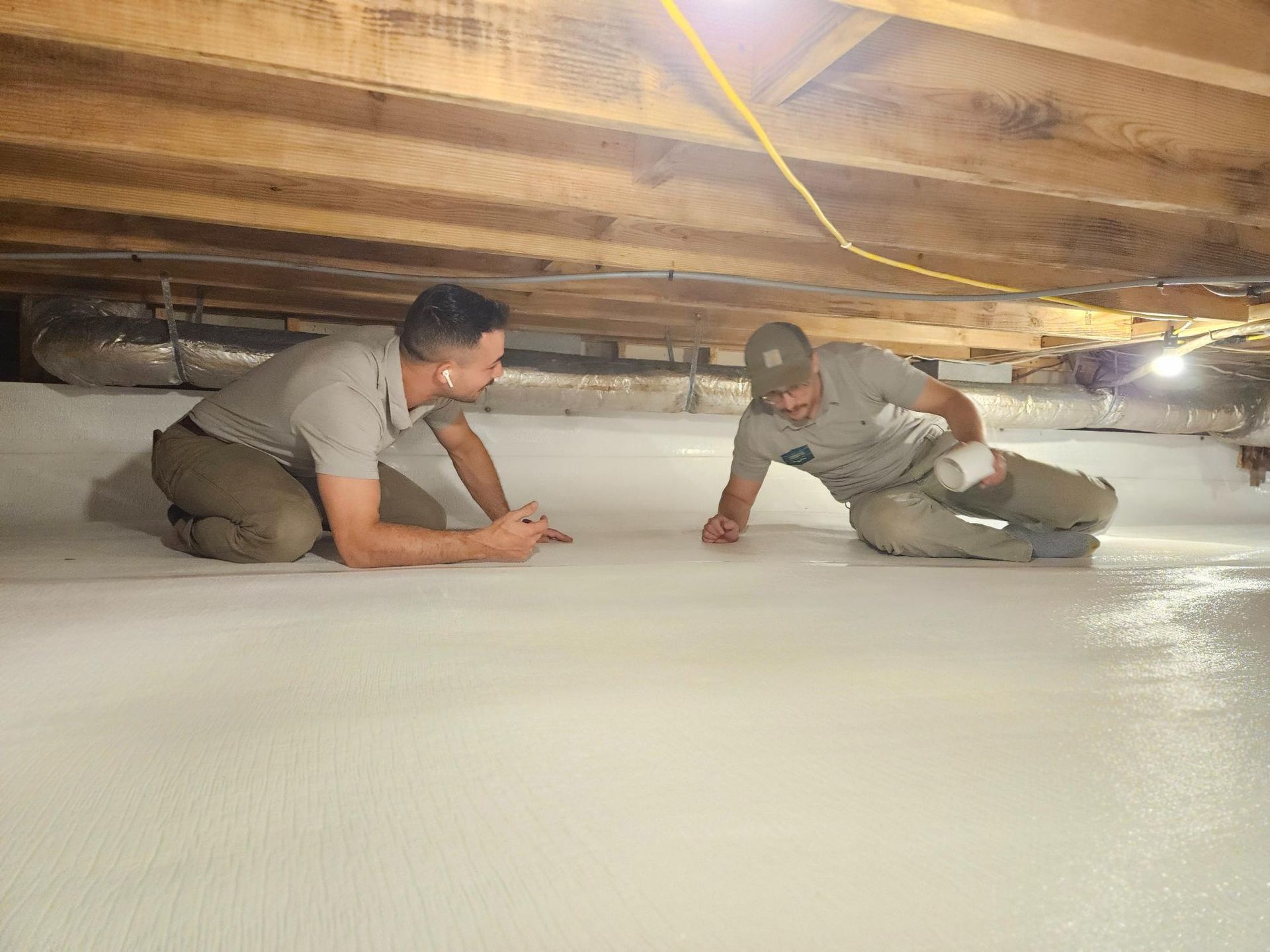
Here's the thing about crawl spaces in the Lowcountry: a lot of them are what we call negative crawl spaces. That means the ground inside the crawl space sits lower than the ground outside. So when it rains, water naturally wants to flow toward your crawl space.
Now, even just an inch of water spread over a large area is hundreds of gallons. That part's true. But here's where it gets complicated - and why no one can give you exact numbers:
First, you'd need to measure the exact surface area around the crawl space where water's collecting. Okay, that's doable. But then you need to figure out the soil's holding capacity. Different soils hold different amounts of water before they start letting it flow. Clay acts different than sand. Compacted soil acts different than loose soil. This alone makes precise calculation nearly impossible.
Then you've got to figure out how much water actually runs off versus how much soaks in. Good luck with that one.
But here's where it gets really tricky: that water creates something called hydrostatic pressure. Basically, it pushes through your CMU blocks or brick walls. I've looked up studies - found some from Germany where they held pressure plates against concrete blocks to measure how much water passes through at different pressures over different surface areas.
Even with all that controlled testing, it's still just estimates. And that's in a lab. Your crawl space isn't a lab.
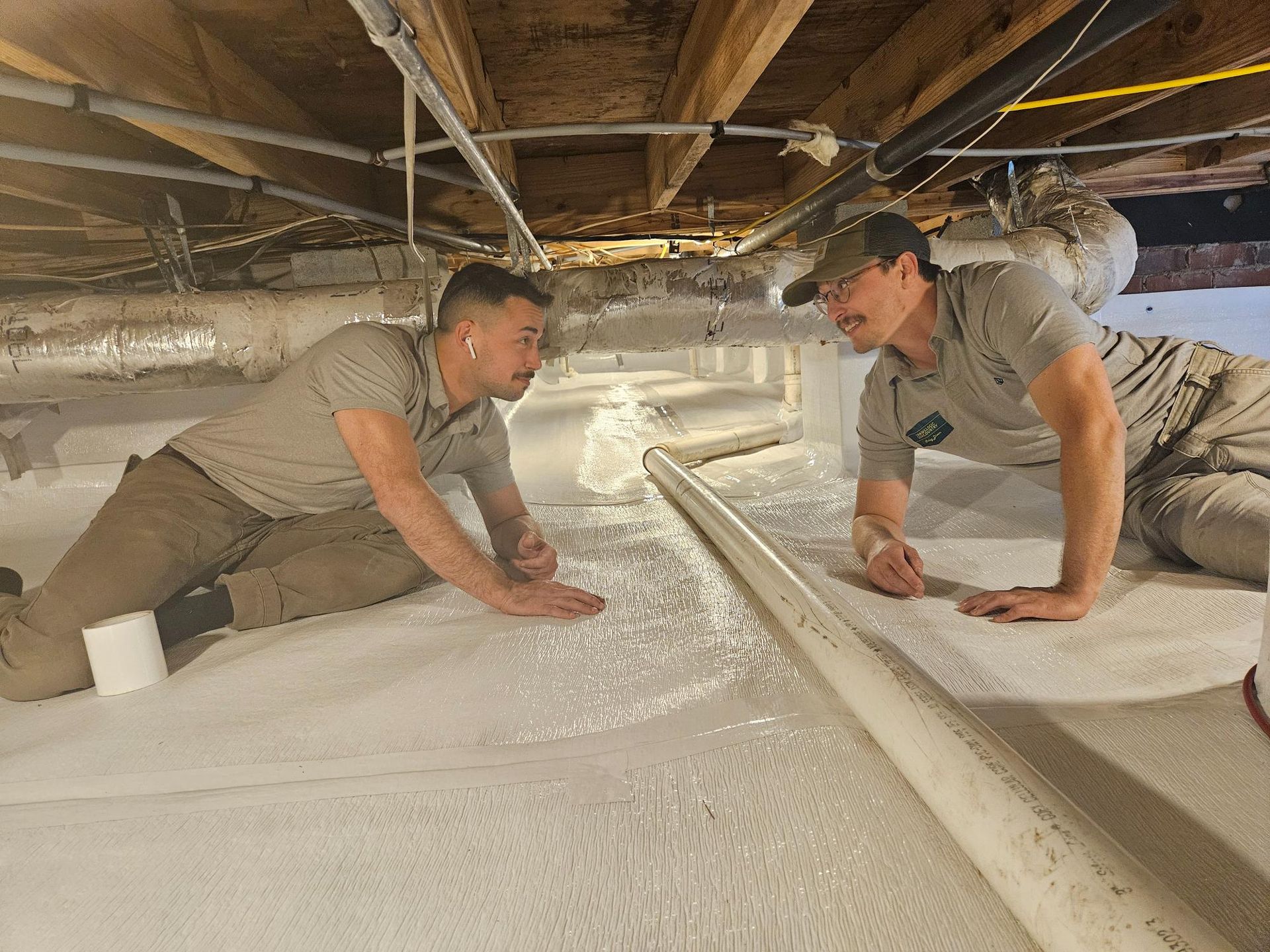
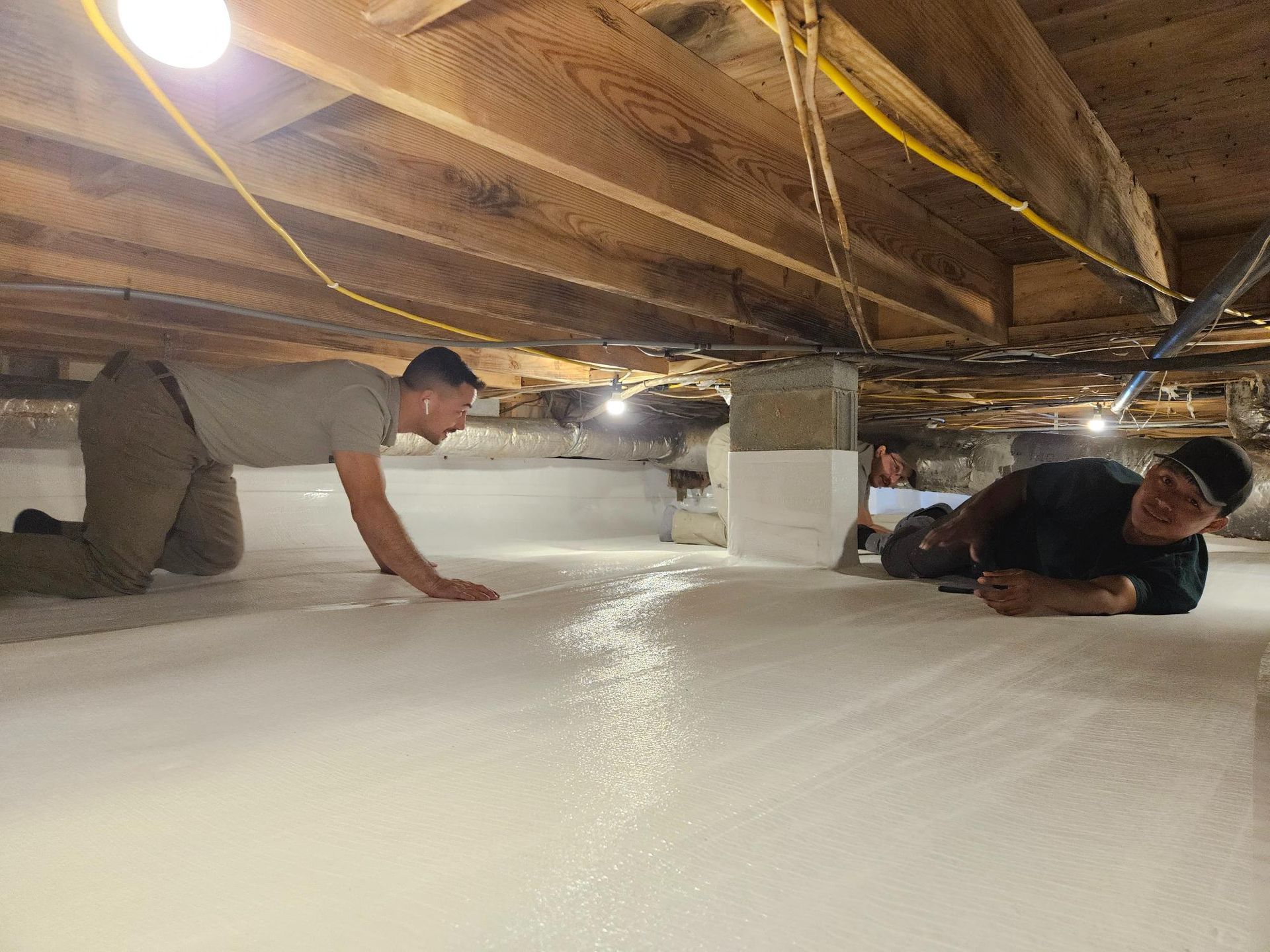
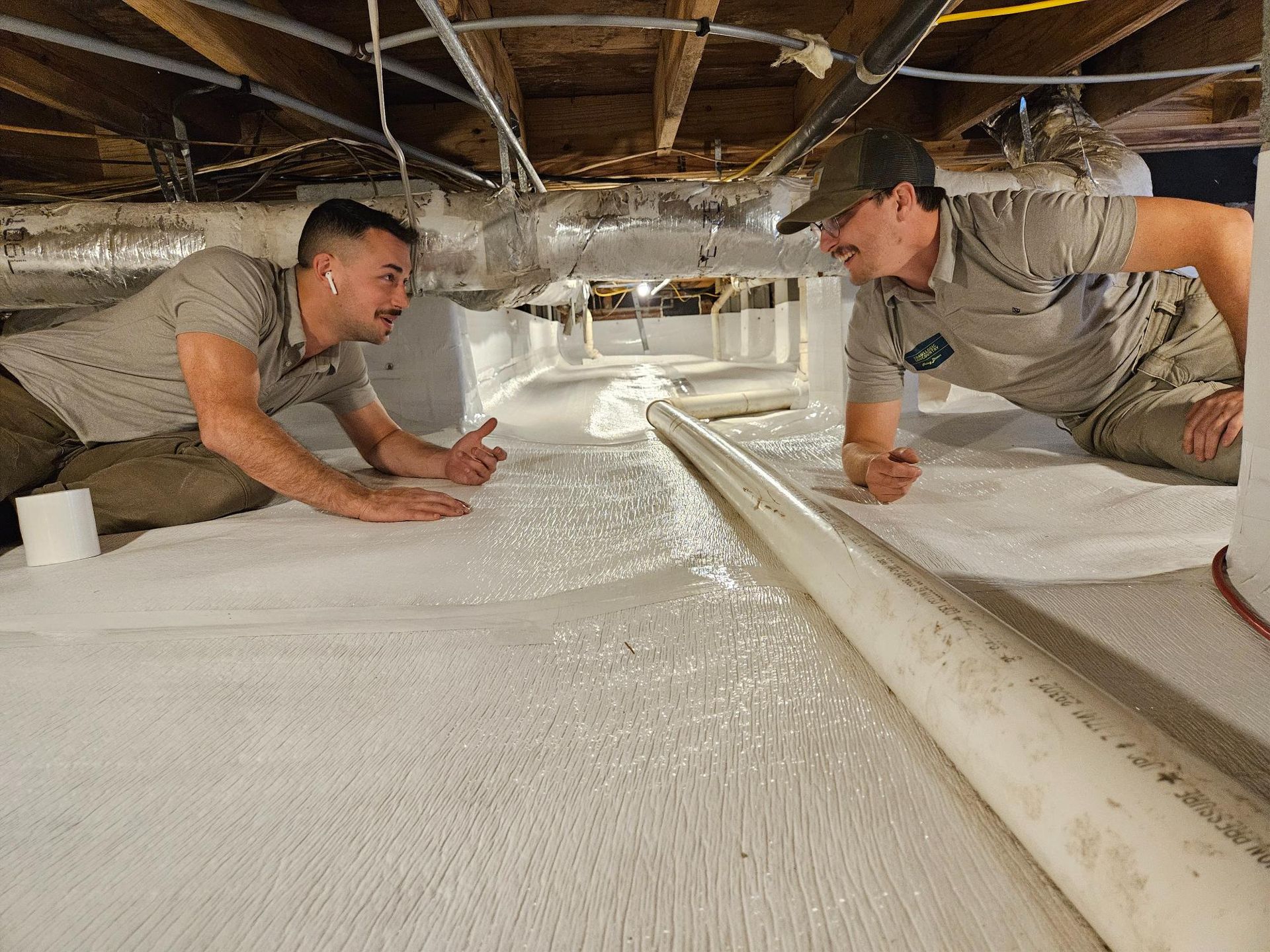
The German Studies Problem
Those German studies I mentioned? They're good research. Real scientists doing real measurements. But here's the problem: they're measuring water flow through concrete blocks in controlled conditions. They know the exact pressure, the exact surface area, the exact type of block, and the exact amount of time.
Your crawl space has none of that consistency. The pressure changes with every rain. The blocks might be different ages, different types, installed differently. Some areas might have cracks. The ground might slope differently on each side of your house. You see where I'm going with this?
So even if we used those studies - and they're the best we've got - we'd still be making educated guesses at best. And honestly? Those guesses probably wouldn't be all that close to reality.
The Honest Approach at Crawl Logic
So what do we do instead? Simple: we massively overshoot the mark.
When I look at a crawl space and see water coming in, I don't pretend I can calculate exact gallons. I look at the situation and think, "Okay, we've got some water flow here. Could be a few gallons, could be more." Then we install a sump pump that can move 60 gallons per minute.
Is that overkill? Maybe. But you know what? Your home is too important to guess low. If we install equipment that can handle way more than you probably need, then even on the worst rain day of the year, you're covered.
That's really all any honest contractor can do. Look at the situation, make the best judgment call possible, and then plan for worse than you think it'll be.
What This Means for Charleston Homeowners
Here's what you need to know when you're getting quotes: if a company tells you exact numbers about water flow, ask them how they measured it. Not how they estimated it - how they actually measured it.
Because unless they've set up flow meters and pressure sensors and done soil analysis and sat there taking readings during multiple rainstorms, they're guessing. And there's nothing wrong with educated guesses - as long as they're honest about what they are.
Red flags to watch for:
- Companies that claim exact measurements without explaining their method
- Anyone who uses big scary numbers to pressure you into quick decisions
- Contractors who won't admit the limits of what they can know
Good signs:
- Honesty about what's measurable and what's not
- Solutions that account for worst-case scenarios
- Willingness to explain their reasoning
At the end of the day, you want someone who's more interested in protecting your home than impressing you with numbers they pulled out of thin air.
The Bottom Line
Look, I could tell you that hundreds of gallons are flowing into your crawl space. It might even be true. But I can't prove it, and neither can anyone else. What I can tell you is whether your crawl space has a water problem, how serious it looks, and what kind of equipment we'd install to handle it - with plenty of margin for error.
That's honest work. That's what you deserve when you're trusting someone with your home.
If you're dealing with crawl space issues in Charleston, give us a call. We'll come take a look, tell you what we see, and give you our best assessment. No made-up numbers, no scare tactics, just straight talk about what your home needs and how we'd fix it.
Because at Crawl Logic, we'd rather lose a job by being honest than win one by making stuff up.