Why We Don't Recommend Spray Foam in Your Crawl Space
Crawl Logic Lowcountry
The Problem with "Perfect" Solutions
WHEN PROTECTION BECOMES A LIABILITY
Look, I get why people love the idea of spray foam insulation in their crawl spaces.
It looks professional, it's expensive (so it must be good, right?), and technically, it does exactly what it's supposed to do.
But after 15 years of crawling under Charleston homes, I've learned something important: the fanciest solution isn't always the best solution.
Here's the thing about spray foam - it's both protecting your home and potentially hiding a disaster waiting to happen.
And that's exactly the problem.
Welcome to Crawl Logic Lowcountry!
How Spray Foam Actually Works
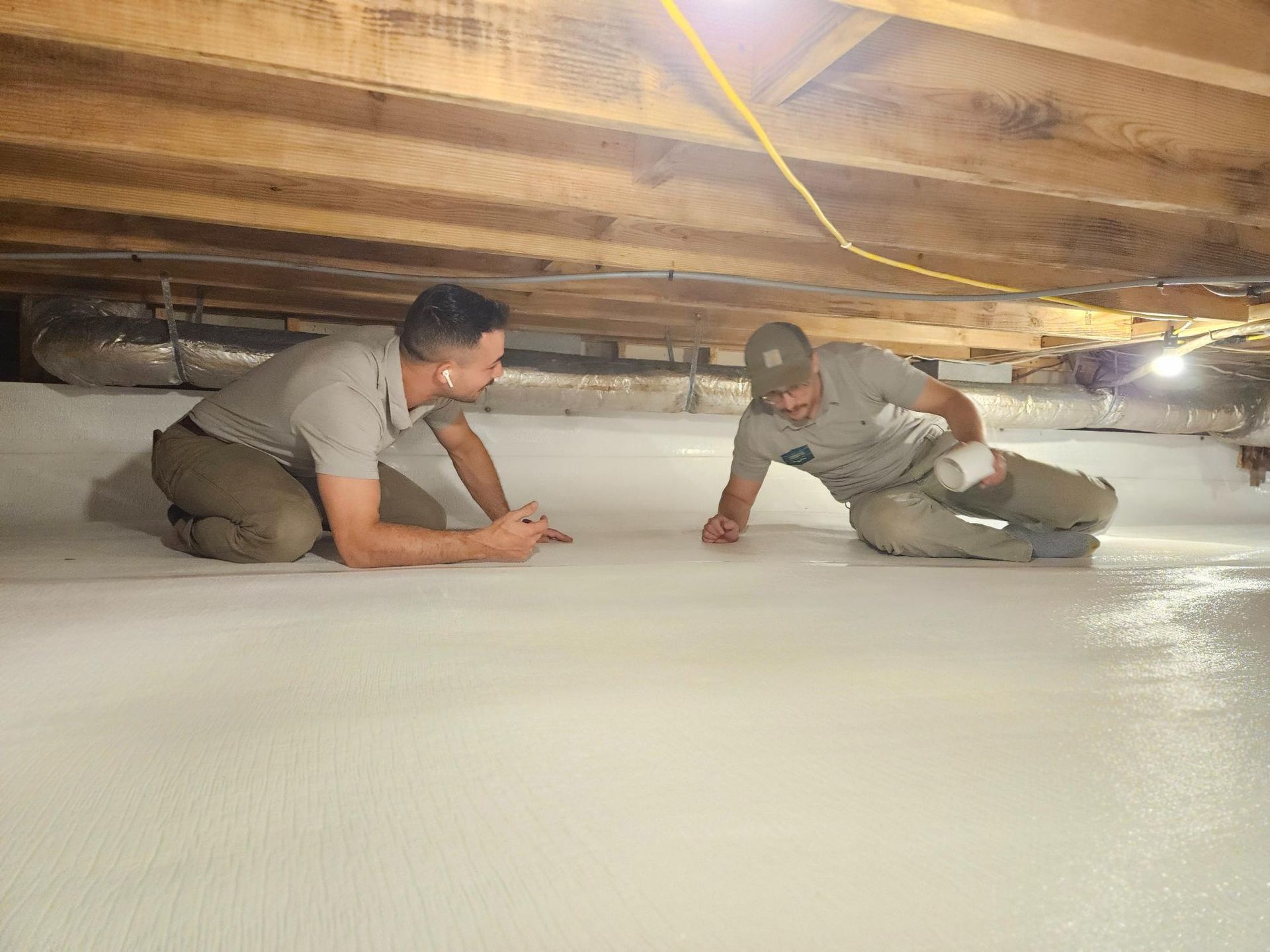
When you look at spray foam insulation in a crawl space, you'll often see condensation beading up on the surface. That's actually the good news - it means the foam is doing its job. Closed cell spray foam is impermeable, which is a fancy way of saying water can't pass through it. So in our humid Lowcountry climate, moisture condenses on the surface instead of soaking into your subfloors.
Sounds great, right? In the short term, it is. That foam is protecting your wood from direct moisture contact.
But here's what I see every single time: the joists are never fully covered. There's always exposed wood showing. I'm not entirely sure if it's a code requirement or just standard practice - probably related to termite inspections - but in 15-plus years, I've never seen spray foam completely cover everything. And that exposed wood? That's where the problems start.
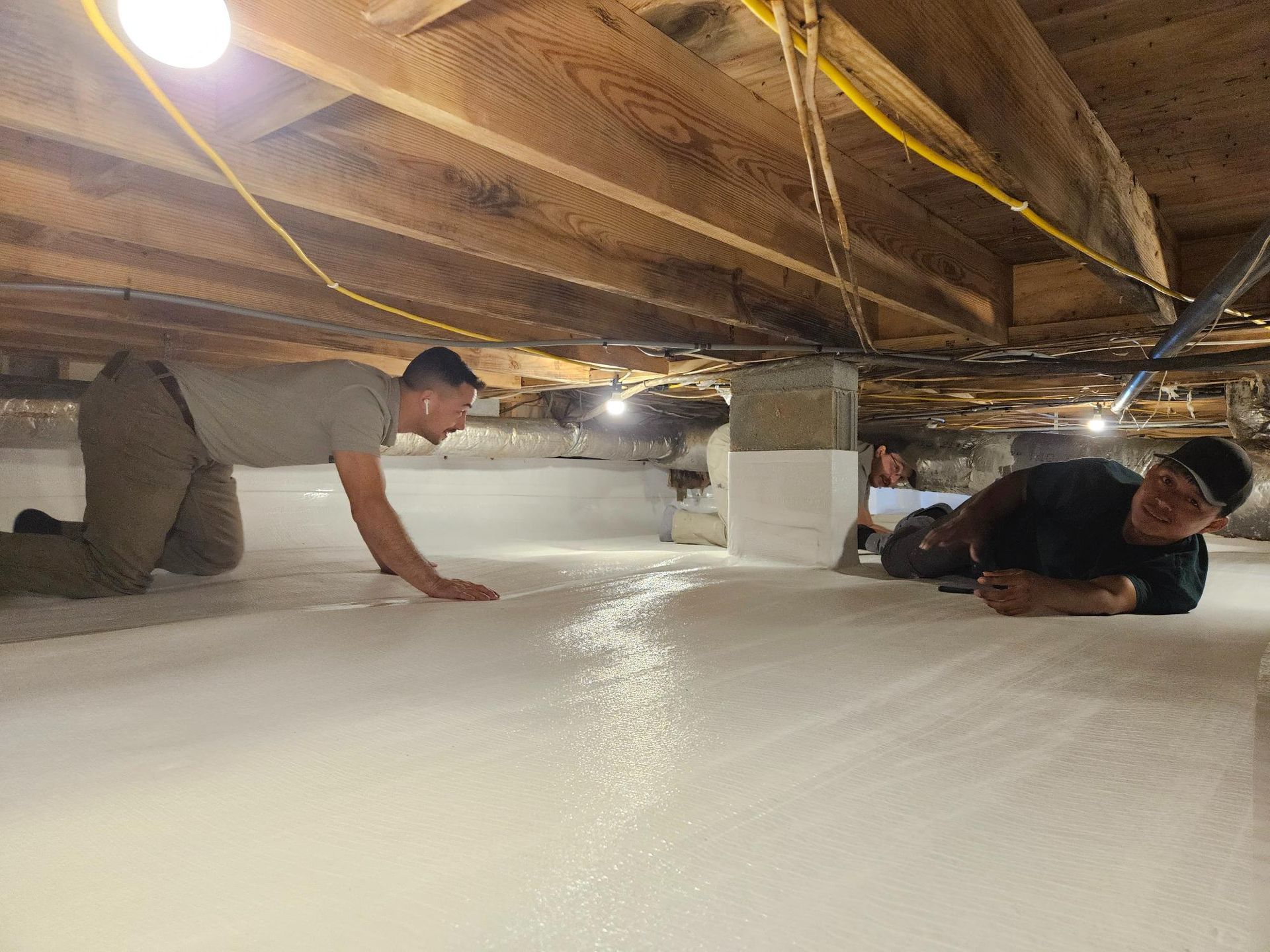
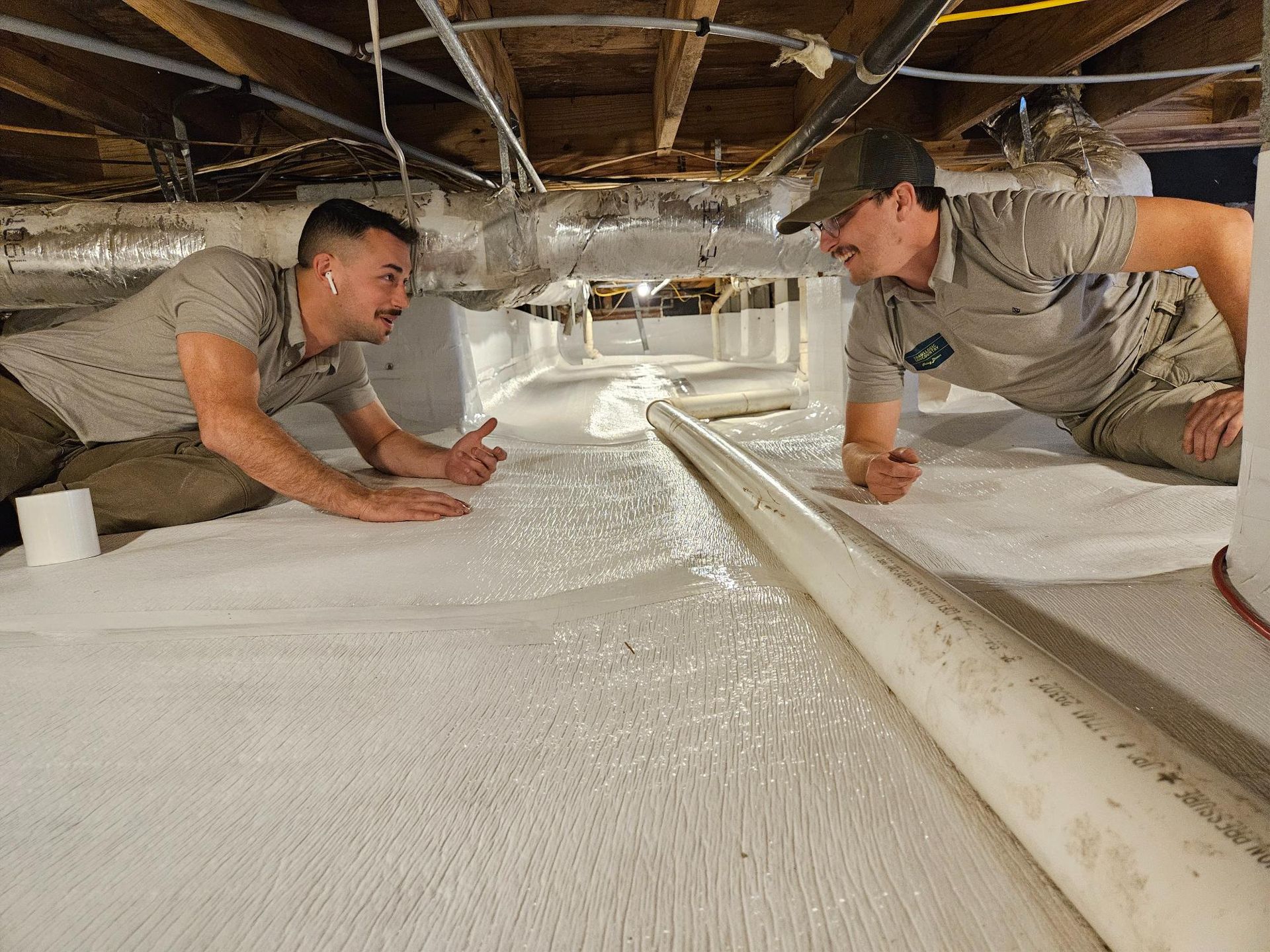
The Osmotic Pressure Problem
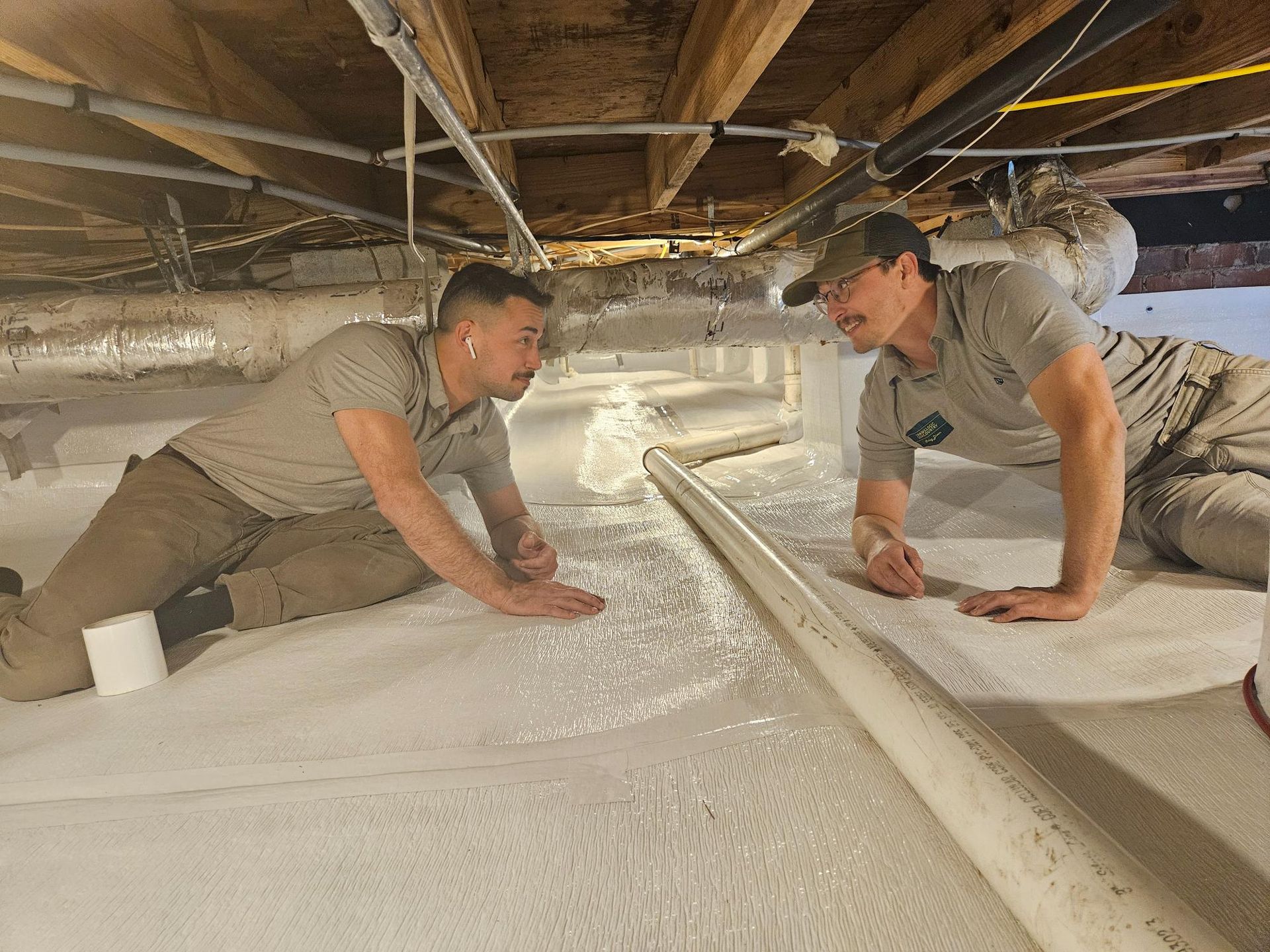
Here's where things get tricky. There's something called osmotic pressure - basically, moisture finds a way. Even though that spray foam is blocking direct contact, moisture will transfer through those exposed parts of the joists over time. It's like water finding the path of least resistance.
Now, if you're in a place with just seasonal humidity - maybe a few months of high moisture and then it dries out - the spray foam might actually work in your favor. But here in the Lowcountry? We've got humidity year-round. And that means moisture is constantly working its way through those exposed joists and into your subfloors.
The real problem? You can't see it happening. There's no way to access those subfloors from down in the crawl space to check moisture readings. You won't know there's an issue until it's already serious. And if you've got vinyl flooring up top - which doesn't breathe - you're creating a perfect recipe for hidden moisture damage.
Real-World Disaster Story
Let me tell you about the first crawl space job I ever did. This story stuck with me for a reason.
Beautiful home in an affluent part of Hilton Head. Really nice place, really nice people. Their high-end refrigerator had a tiny leak - the kind of thing that in most homes would be a quick, easy fix. Maybe a small section of subfloor to replace at worst.
But because of the spray foam insulation, that small leak didn't stay small. The water couldn't drain down through the foam, so instead it spread outward in all directions. We're talking about a 50-foot radius of water damage. I don't even want to calculate the square footage.
By the time they discovered the problem, we had to spend days removing spray foam by hand just to access the damaged subfloors. Then the real work began - replacing massive sections of structural flooring. What should have been a minor repair turned into tens of thousands of dollars in damage. All because nobody could see what was happening under that "perfect" insulation.
Why Visibility Matters More Than "Perfect" Protection
Here's what that Hilton Head job taught me: I'd rather deal with a problem I can see early than discover a disaster later.
Yes, spray foam provides excellent protection in the short term. But construction isn't just about solving today's problem - it's about not creating tomorrow's nightmare. When you seal everything up so tight that you can't monitor what's happening, you're gambling with your home's structural integrity.
Think about it this way: would you rather catch a small leak when it's affecting a two-foot area, or after it's spread across your entire crawl space? The answer seems obvious, but that's exactly what spray foam prevents you from doing - catching problems early.
Sometimes the simpler solution that lets you actually see what's going on is worth way more than the high-tech fix that hides everything.

The Only Way Forward
Listen, spray foam insulation isn't all bad. It has its place in construction. But when it comes to crawl spaces - especially in our humid Charleston area - I've seen too many expensive disasters to recommend it.
At the end of the day, the best solution is the one that protects your home today and lets you catch problems before they become catastrophes tomorrow. Give me visibility over a "perfect" seal any day of the week.
If you've got spray foam in your crawl space now, or if you're trying to decide on the best approach for your home, let's talk. We can assess what's really going on under your house and give you straight answers about the best way forward - not just the most expensive option.